

People We Meet on Vacation Chapter 1
Scene Analysis

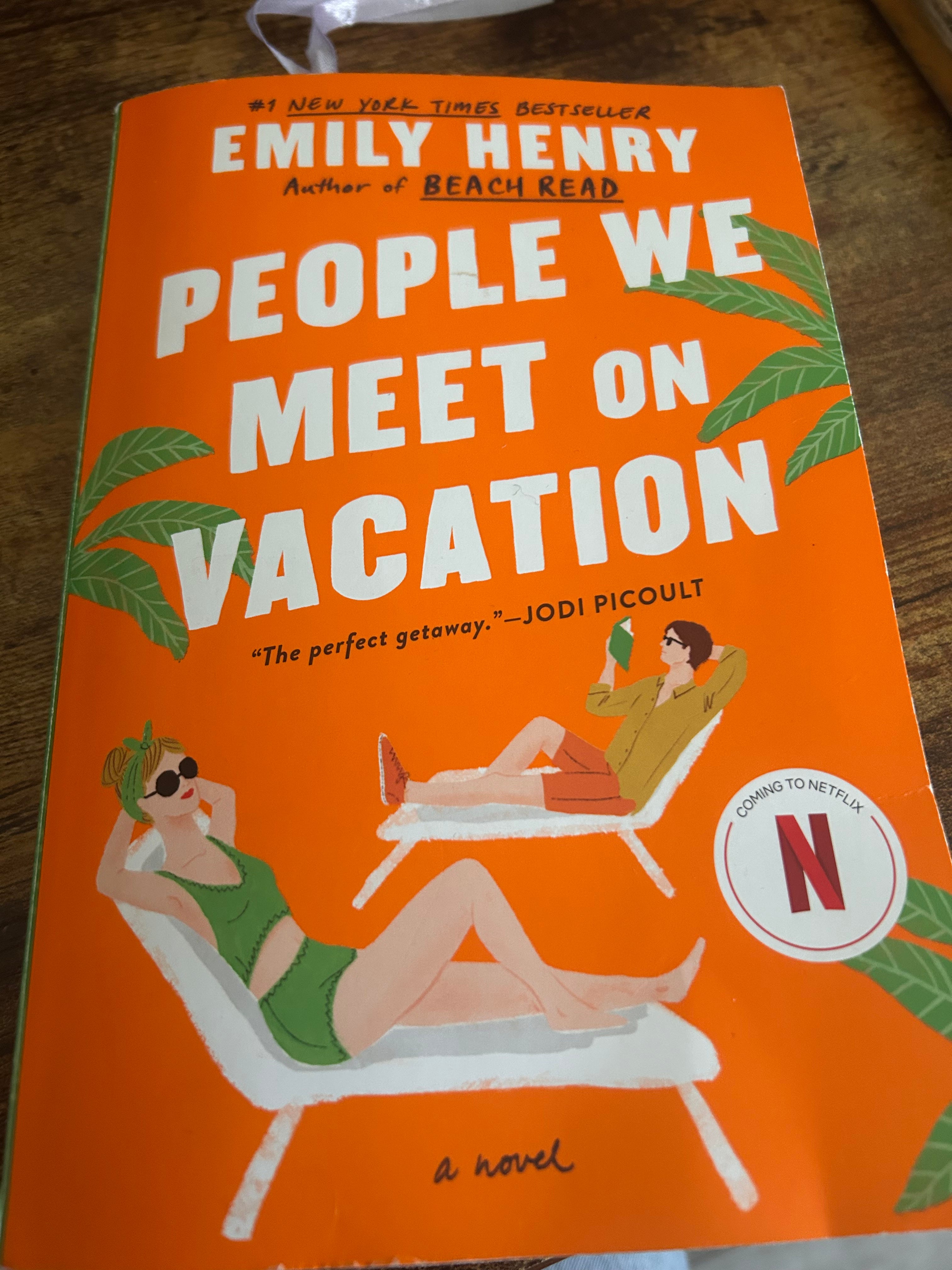
One thing I’ve discovered while doing story analysis, is that not everything fits in a clean box. Beat structure and scene structure give authors guidelines that help identify patterns within a story, and to structure your own scenes.
But these structures are suggestions, not fact.
Not every author follows the same structure, and some authors like to break the rules. Story analysis is great because it allows you to question when the author follows the pattern, and when they chose to do something different. It also allows you to consider why they may have made the choices they made.
I think People We Meet on Vacation is one such book, where the scenes don’t fit neatly into the scene structure—and that is fine.
Because it works.
The question we want to explore is, why does it work?
Scene #1 Summary
It’s their Friday Meeting at R+R and Poppy has to pitch a trip idea for the upcoming summer feature. The problem? She has zero inspiration—something she needs a ton of to work at a travel magazine.
Scene #1 Analysis
Setting - a conference room at the office on Friday
Protagonist - Poppy
Object of Desire (OOD) - to come up with a pitch idea for her next summer feature for next year that her boss approves of
Why? - Because Swapna wants Poppy to write the feature.
Forces of Antagonism - Poppy’s writer’s block; Swapna
Swapna’s OOD - For Poppy to pitch an idea that is in season, inspired and hasn’t been done within the past decade.
Why? - Because it’s important to her that the idea be original.
Crisis -
A: Choose a random place and hope it lands
B: Continue brainstorming locations that may fit Swapna’s requirements
Inciting Incident - Poppy spots Alex at the bar and tries to get him to join in a bit of role-playing.
Progressive complications - Alex refuses to play along, and even when Poppy admits she wants to help him get over Sarah, he resists.
Turning Point -
“Poppy, don’t you think Vegas could be fun?”
“It could definitely be fun,” I agree.
“Santorini,” Garrett says in the voice of a cartoon mouse.”
“Santorini is lovely, of course,” Swapna says, and Garrett heaves an audible sigh of relief. “But we want something inspired.” She looks at me again.
Poppy’s last attempt at avoiding making the crisis decision here is to simply agree with Swapna’s suggestion, since she hasn’t thought of a better idea.
However, as Swapna continues to stare at Poppy, it becomes clear that Poppy has to confront the issue and come up with a pitch for the summer feature herself.
Climax -
“I’ll keep brainstorming and work something up to pitch you on Monday,” I suggest.
Resolution -
She nods in acceptance. Garrett sags in the chair beside me. I know he and his boyfriend are desperate for a free trip to Santorini. As any travel writer would be. As any human person probably would be. As I definitely should be.
Don’t give up, I want to tell him. If Swapna wants inspiration, she’s not getting it from me. I haven’t had any of that in a long time.
The resolution surfaces the real crisis here—Poppy isn’t feeling inspired and hasn’t in a while. This becomes a catalyst for the next scene.
Scene #2 Summary
Over a glass of rose at a cafe, Poppy and Rachel discuss Poppy’s sudden inability to choose a destination for her free vacation. Something that should be—and used to be—easy.
Scene #2 Analysis
Setting - a café in New York
Protagonist - Poppy
Object of Desire (OOD) - to figure out how to be happy without losing the feeling as soon as she gains it.
Why?: Because Poppy’s dream life feels different than she imagined it. She doesn’t enjoy her job like she used to anymore.
Forces of Antagonism - Poppy’s fixed mindset is the force of antagonism here; Poppy believes that although she’s worked hard to achieve what she has, she’s still not happy. Because of this, she feels directionless and purposeless.
Rachel’s OOD - for Poppy to confront the reasons for her lack of happiness
Why?: Because Poppy is clearly stuck and not enjoying her work like she used to.
Crisis -
A: Choose any location for her trip to make her boss happy despite being unhappy herself.
B: Figure out what makes her happy.
Inciting Incident -
“—so I could get my dream job. And I actually got it. I work at one of the top travel magazines! I have a nice apartment! And I can take cabs without worrying too much about what that money should go to, and despite all of that”—I take a shaky breath, unsure of the words I’m about to force out even as the full weight of them hits me like a sandbag—”I’m not happy.”
Until this point, the goal was to figure out why it’s so hard for Poppy to pick a place for her next trip.
But this is when the real problem surfaces—the problem of why Poppy is having so much trouble with something that used to come easily to her.
Poppy’s problem isn’t that she can’t pick a vacation—it’s that she lacks the motivation to do so because her ultimate object of desire is happiness— which is now out of her reach.
Progressive complications -
One way that Poppy avoids facing the crisis is by complaining about her lack of happiness.
Poppy compares Rachel’s level of happiness to her own.
“You sell it well, Rach,” I say. “You seem pretty happy.”
This suggests that because Rachel is happy, Poppy should be too. Instead of accepting that she’s missing something and taking action to fix it, she’s still stuck on how things should be.
Poppy looks for solutions:
“Are you saying I should get a dog?” I say.
“So I need new goals.”
She hops from one possible solution to the next in hopes of some quick fix to her dilemma.
Turning Point -
“Anyway,” Rachel continues, “she (Rachel’s mom/therapist) told me that sometimes, when you lose your happiness, it’s best to look for it the same way you’d look for anything else.”
“By groaning and hurling couch cushions around?” I guess.
“By retracing your steps,” Rachel says. “So, Poppy, all you have to do is think back and ask yourself, when was the last time you were truly happy.”
This is Poppy’s last attempt to avoid facing the crisisby using humor and sarcasm to deflect from the issue.
Climax -
“I know right away when I was last truly happy. Two years ago in Croatia, with Alex Nilsen.”
According to Story Grid, the Crisis is the moment the protagonist acts on the decision they make during the climax.
But in this particular scene, Poppy doesn’t take physical action. What she does do, is finally acknowledge the real reason for her unhappiness, which she’s been avoiding until this point. This is why I chose this as the climax of the scene.
Resolution -
“Just think about it, will you?” Rachel says. “Dr. Krohn is always right.”
“Yeah, I say. “I’ll think about it.”
Do you agree with my take on Chapter 1? I’d love to hear your interpretation—share your thoughts in the comments!